Drive through any neighborhood in Valrico, Brandon, or Riverview and you'll see it: St. Augustine grass. It loves our heat and handles our humidity, but it has quirks that trip up a lot of homeowners. Here's how to keep it thick and green year-round.
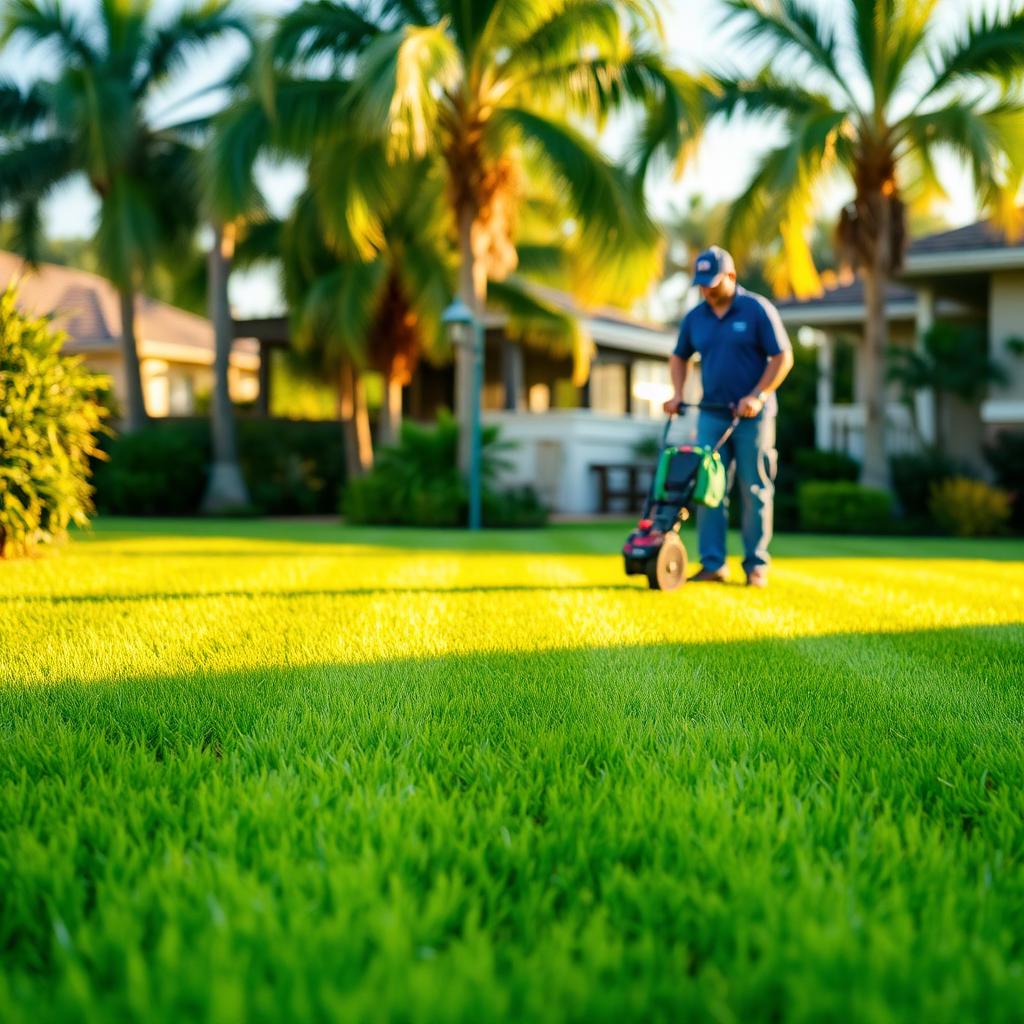
Mow high — 3.5 to 4 inches
The single biggest mistake we see is mowing too short. St. Augustine needs height to shade its roots and crowd out weeds. Cutting it below 3 inches stresses the grass, opens the door to weeds, and scalps the crown of the plant.
- Mow at 3.5–4 inches, year-round
- Never remove more than 1/3 of the blade at once
- Keep mower blades sharp — dull blades shred and brown the tips
Water deep, not often
St. Augustine does best with about 3/4 inch of water per session, two to three times a week in the dry season. Daily light watering trains shallow roots and invites fungus. Water early in the morning so the blades dry before nightfall — wet grass overnight is an open invitation to gray leaf spot.
Watch for chinch bugs
Chinch bugs are the #1 enemy of St. Augustine in Florida. They hit hardest in hot, sunny, dry patches — usually along driveways and sidewalks. If you see straw-colored patches spreading in summer that don't respond to watering, it's likely chinch bugs, not drought.
Fertilize on Florida's schedule
St. Augustine wants feeding in spring, early summer, and early fall — but skip heavy nitrogen in mid-winter when growth slows. And be mindful of local fertilizer ordinances: Hillsborough County restricts nitrogen applications during the summer rainy season to protect Tampa Bay's water quality.
Need A Hand With Your Yard?
Licensed, insured, and 5-star rated. Get a free, no-pressure estimate for your property.